

His Serene Highness Hertzog Petro Lapko 23rd Duke Of Cesīs Marquis of Wenden Baron of Bohemia Knight Royal Order (L)
The Lapko family name can trace its origins back to 1223AD and the Knights of the Teutonic order of Livonia and after many territorial skirmishes they continued to maintain their rank as Prussian noble's and knights of Bohemia.
All results for nobles of Livonia lapko »
The Livonian its demise in the 1700's knighthood (German: Livländische Ritterschaft) was a fiefdom that existed in Livonia (now Southern Estonia and Northern Latvia). It was formed in 1561 by Baltic German nobles and disbanded in 1917. Like other Baltic knighthoods, the Livonian also had semi-autonomous privileged status in the Russian Empire.
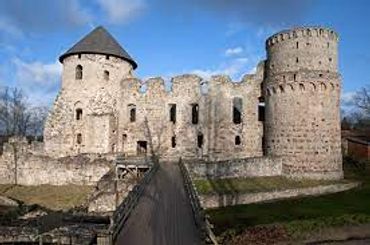
Discover the unique architectural features that make the Dukedom of Cesīs a true masterpiece of historic design offer insights into its construction and historical importance.
Historical Heritage of theDukedom of Cesīs

Our History
The Livonian Order was an autonomous branch of the Teutonic Order, formed in 1237. It was later a member of the Livonian Confederation, from 1435 to 1561. Founded: 1237 Ceased operation: 1561 Headquarters: Viljandi, Estonia · Cēsis, The Livonian Brothers of the Sword (Latin: Fratres militiæ Christi Livoniae, German: Schwertbrüderorden, French: Ordre des Chevaliers Porte-Glaive) was a Catholic military order Founded: 1123 established by Albert, the third bishop of Riga (or possibly by Theoderich von Treyden), in 1202. Pope Innocent III sanctioned the establishment in 1204 for the second time. The membership of the order comprised German "warrior monks" who fought Baltic and Finnic pagans in the area of modern-day Estonia, Latvia and Lithuania. Alternative names of the Order include Christ Knights, Sword Brethren, and The Militia of Christ of Livonia. The seal reads: ILIDIECRI•DE•LIVONIA+*****ISTRI•*T*R*.

Later
During the 13th century the Livonian Order was the chief military force of the German feudal lords and the Catholic Church in the eastern Baltic. By order of the pope and Livonian bishops, it subjected the Latvian and Estonian peoples to the authority of the German feudal lords. The defeat at the Battle on the Ice of 1242 halted the movement of the Livonian Order to the east. At the end of the 13th century the order began to struggle against the Riga archbishops for political hegemony in the eastern Baltic. After winning this conflict in 1330, the Livonian Order became the feudal seigneur of Riga. However, the destruction of the Teutonic Order at the battle of Grunwald (Tannenberg) in 1410 undermined its political position. According to the terms of the Kirchholm (Salaspils) Treaty of 1452, Riga was placed under the authority of two feudal seigneurs, the archbishop and the Livonian Order, despite the opposition of the city and continuing conflict between the seigneurs. This arrangement continued until the 1560’s.
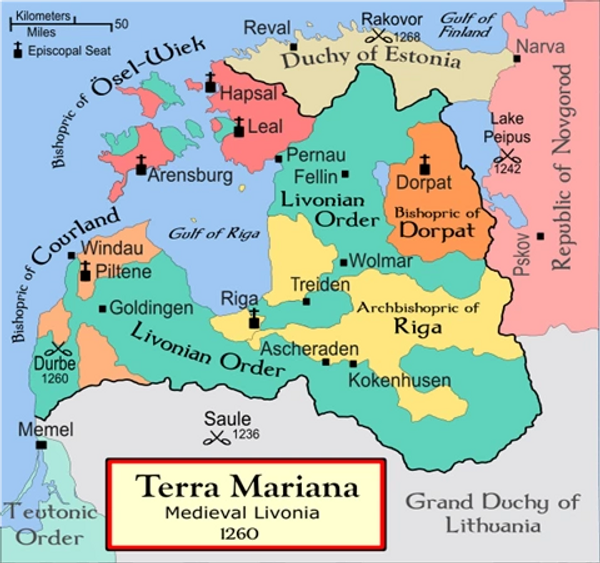
Becoming part of the Polish Kingdom
After the Order of German Knights broke up in 1466, West Prussia became a "class state" under the protection of the Polish King. This form of government worked by mutual agreement between the different levels of society: The nobility, church, the citizens, and the free landholders. In 1569 a large part of West Prussia came completely under Polish domination, until it was incorporated as a province in the expanding empire of Brandenburg Prussia in 1772, after the partition of Poland. Danzig and Thom remained Polish until 1793. The two regions of East and West Prussia were briefly united between 1824 and 1878.
Explore the historic Dukedom of Cesīs landmark gallery
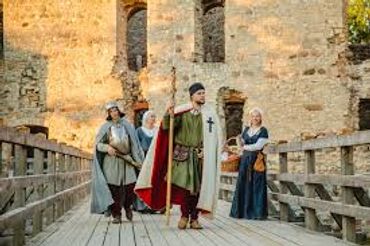
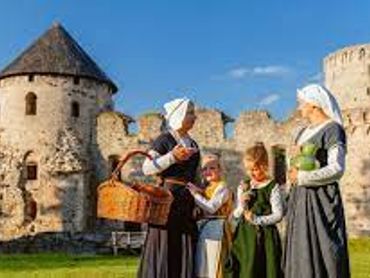
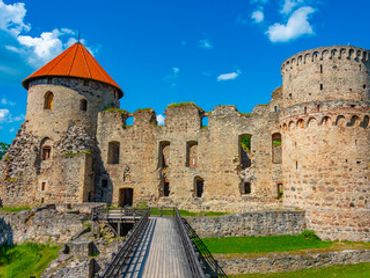
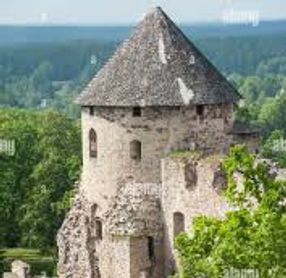
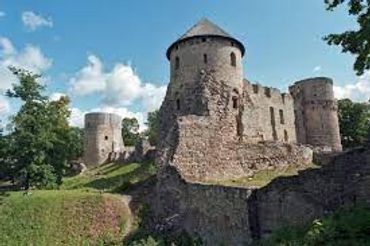
Lapko’s Family’s Journey to Australia.
Records indicate my parents were both in Unrra- Michelsdorf a displaced persons camp as early as 1944. They were prisoners and lived in the labour camp until they were liberated by the Americans at the end of the Second World War. It was then referred to as the American sector. My Father was only 15 years old. His father the 21st Marquis of Wenden was a high-ranking officer in the Polish army and was killed in the first days of WW11. My parents met and were married during their time there I was born in October of 1946. In 1947 they were allowed to leave Unrra-Michelsdorf camp and moved to Belgium were my father worked as a coal miner until 1952. Both my Sisters were born in Belgium.
In 1952 the family was sponsored by my mother’s stepsister and The Red Cross together with the Catholic Church to migrate to Australia. I am not aware of what my parents did before the war however records indicate that were farmers and held lands in Poland. I vividly recall the words of my paternal grandmother Francesca Kopytko (nee Lapko) once warned me when I first joined the army as apprentice musician in 1962 that if I was ever posted to eastern Europe particularly Russia not to divulge my sir name to anyone other than those in my own forces as if it became known that I came from a European Noble family they may try to execute me.
At that time Russia was a communist country and it was at the height of the cold War.
Nothing more was explained at the time so I mealy dismiss it as an old woman's Fairy-tale. It wasn’t until 2009 when I extensively started to investigate our Family heritage that I discovered that her fears may have been proven correct as the Lapko's were in fact of European nobility. Dating back to the early 1123 in what was then a small Kingdom known as Livonia and members of the Teutonic order.
My great- great- great Grandparents, were part of Livonia Royalty (now part of Lithuania and Poland under the Lithuanian Polish confederation). living in Belarus in a region called Lapki, being of noble standing they were constantly living in fear for their lives. The Russian Bolshevik Communists in 1905-7 began purging all and any European noble families. This also included the Russian Czar and his family.
